
A Very Certain Way
#30 of 52 Fictions: A Story a Week for 2026

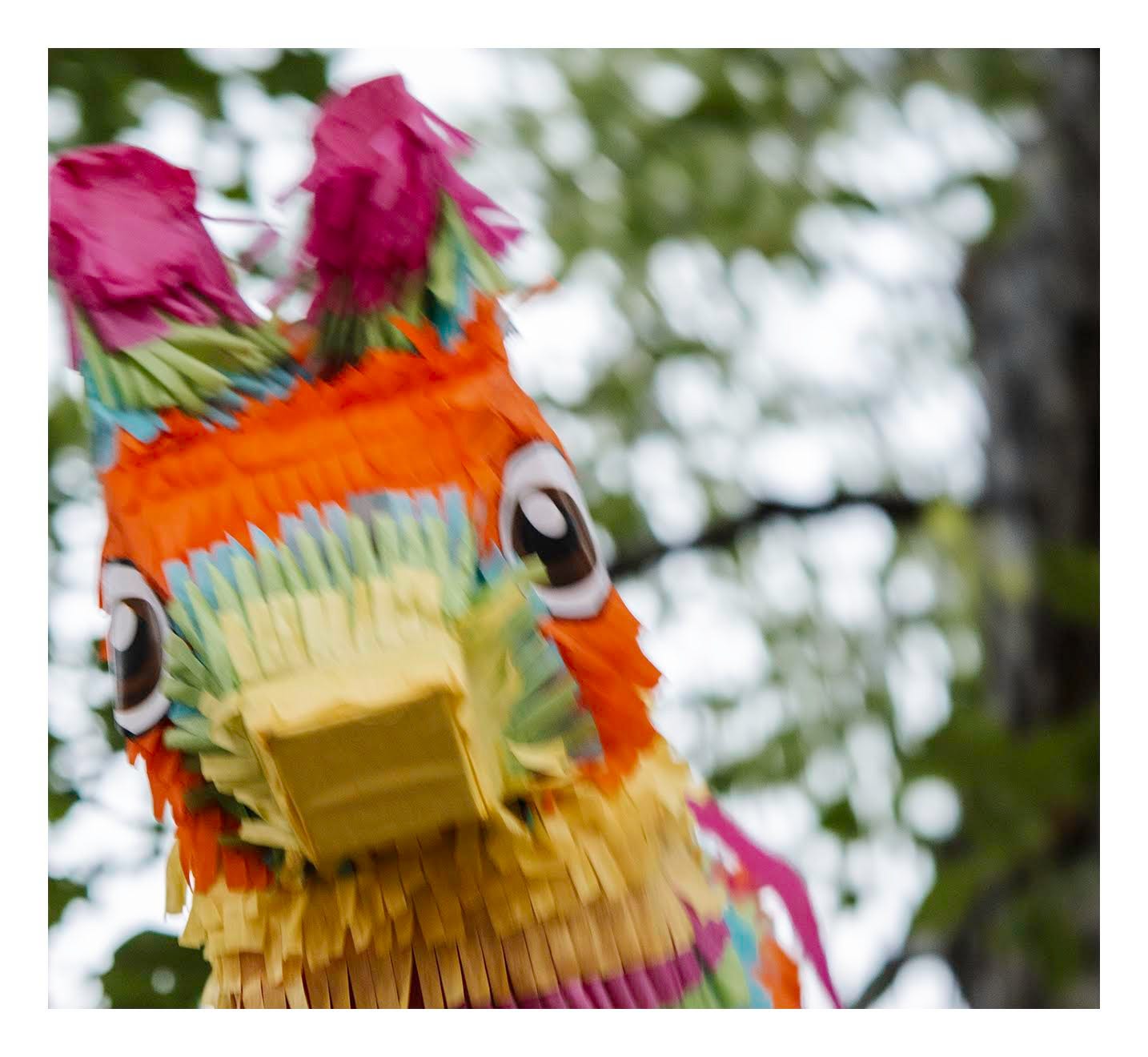
I want tell you about this one birthday, but to understand that one, you need to know a little about my mom.
A certain way was how Mom liked things. Very certain. I’ve done some therapy on this topic. If the shirts in my closet weren’t all facing the same direction, she’d give me a look that put terror in my heart, and I’d scramble to fix the misdirected garment like a man trying to plug a big leak in a small boat. If I forgot a please or thank you, she treated it as if I’d slapped her. If I entered the house in muddy shoes, she’d shriek and chase me out as if a rat had strolled in the door. Her standards for herself were even higher: dressed, hair in place, and nails done before she appeared out of the bedroom in the morning; floors clean enough to eat off (but if you tried it, she would have lost her mind); car looking like she had just driven it new off the lot. It never was really a new car, because my dad sold used cars, but he was always giving her a new one if the one she had got a scuff on it somewhere. Other kids let me know their parents thought my mom had a stick up her butt, but she didn’t really care what other people thought. In her mind, this was simply right and proper living.
Once, I was at a friend’s house and got sandwich mustard all over the front of my shirt. On the way home, I decided to try to get out of it by wearing the shirt backwards and trying to be sure that Mom only saw the front of me. It worked for about as long as it takes to say knucklehead, mostly because Dad started laughing at me. He had a phrase he deployed when he saw situations like this: “You can’t blame a man for trying, unless what he’s trying is dumb as shit.” When Mom was around, he’d say “dumb as rocks.” Between him and me, he’d say shit. Dad often did work on the cars he was buying and selling, but he knew better than to come home with grease under his nails.
I wonder now where the piñata came from, because there wasn’t a Mexican mercado within 200 miles of the little Midwestern town where I grew up. Dad may have been the one who acquired it—he liked to amuse himself by bartering with his customers to throw some odd item into the deal, and on any given day he might come home with jewelry, a painting, or a certificate of part-ownership in a racehorse. Or maybe Mom saw the piñata in a magazine and ordered it through the mail.
What I know is, the first I saw it, it was hanging from the big cottonwood in our backyard. I think it was my eighth birthday, but possibly it was number seven or nine. A traditional donkey in rainbow colors, I peered up at it with tingling excitement. We’d never had a piñata before, and none of my friends had had a piñata. I imagined the contents bursting over us like a rainstorm, and my mind spun with the treasures that might be inside. Candy! Toys! Cash!
After giving us hotdogs to eat and pop to drink and setting pointy birthday hats on our heads, Mom let us roam around in a little kid herd for a while, then gathered us and arranged us in a line. She had a broomstick and a blindfold. As birthday boy, I got to go first. I was blindfolded, and she handed me the broomstick, and she spun me around and pushed me toward the piñata. I missed, and everyone laughed. One-by-one, the other kids got their chance. The other kids mostly missed, and everyone laughed, and when someone did hit the piñata, we cheered. But the broomstick bounced off, and the donkey bobbled around as if snickering. There were about ten of us, and after the last one had taken a swing, we started over and went through the line again. Then we did it again.
Well, you can only do that so many times before the party-goers grow restless. But this was the way that you’re supposed to do it, so Mom kept us at it for longer than anyone else would have. We kids began to grow sullen, and the adults watched in silence. Finally, uncharacteristically—because my mom and dad were usually very clear about the boundaries between their realms—Dad stepped in. “Honey,” he said. “Just let them hit it.”
She glared at him, but then she saw the way everyone was watching her, and her mouth tightened. “All right,” she said. “Fine.”
One-by-one we took up the broomstick and made mighty swings that thumped the piñata, and it swayed and spun. It went faster now, and it seemed the piñata must break. We cycled through taking our turns, two times, three times, and we cheered when one of us gave a good whack so that the donkey popped upward.
And yet, none of this seemed to hurt the piñata. Mom watched with arms crossed, the set of her mouth tightening further and further, and then she turned and disappeared into the house.
She came out holding my aluminum baseball bat. She handed it to the tallest of us kids, a girl two years older than me who lived down the road.
We all cheered again. The tall girl cocked the bat with a professional’s form, and she swung hard at the piñata, and it rocketed away, flying up on its rope, so that it banged on a branch above and seemed that it might stick there. But it came down again, and the tall girl was ready, with the kids all jumping and cheering and screaming now, she took another swing and blasted it, so that it nearly wrapped around the branch that it hung from.
When it came down, she took a third swing, but this time she missed, so that the donkey bobbled again in its place, we could see—it was fine.
We all took turns with the bat. I remember I swung as hard as I could, so that my arms felt like they would pull from my shoulder joints, and the piñata just spun around. After we’d all taken a turn with the bat and began cycling through a second time, we tried overhand swings and underhand swings. One kid threw the bat. Nothing worked. The donkey on his rope jittered and smiled at us, and we began to really hate him.
After the sullen silence had fallen again, Mom walked up with her mouth pinched tight like she would chew her lips off. She asked for the bat. She touched the piñata with one hand to steady it. She measured her distance with the bat. Then she cocked back and swung. It wasn’t the most elegant or efficient swing, but it had the force of fury behind it, and the piñata shot up on its rope, smashed his head into another branch, and came down with a dent in his nose. Mom swung again, grunting, and some of the kids began to cheer again. The donkey spun and jounced crazily. She swung, catching the donkey right in the face, and this time, finally, something really happened—the piñata came off the rope and flew and rolled.
We kids swarmed to it, shrieking, and we punched at it, pulled on the legs and head.
“Hey!” Mom shouted. “All of you. Get away from there.”
We did. And Mom stood over the donkey, and she raised up the bat, and she brought it down. She was red-faced and gasping. Her hair had come loose and swung around in a way that I had never seen before, and she raised the bat and brought it down over and over again, pounding and bludgeoning.
Then, the piñata burst open.
The sweet candy spilled out. Shouting and screaming, we shoved and jumped and crawled to grab at the candy, to grope in the donkey’s open cavity.
When I looked up at Mom, she was sweating, slumped, and staring off to a vague distance.
I think she sensed my gaze. She pulled herself upright. Dad was watching her too. He laughed, and he reached for the bat. She smiled in an embarrassed way that I’d not seen before, and she handed him the bat.
Then, she clapped her hands. “Hey, kids!” she shouted. “Calm down. You’re not a pack of monkeys. Don’t eat the candy now.” She tucked her hair behind her ear. She pointed at the house, where the floors were clean, and everything was in its place. She said, “There’s cake.”
A Delay: On Monday, for work, I took flight from Denver to Grand Rapids, but there was a storm squatting over Grand Rapids, so we circled until we were low on fuel, then diverted to Cleveland. In Cleveland we sat on the tarmac for a couple of hours waiting for fuel and the storms to clear. Finally, we took off again, and we flew back to Grand Rapids. We landed. Sharing seat beside me was an extraordinarily well-behaved blue-eyed baby. This was a baby with aplomb. I told the baby he was a good baby. I told him that we were almost done.
And then the captain came on and said that we would have to wait for a gate to open. So we sat there, 500 feet from the gates, waiting, for another hour and a half.
Finally we were able to go to a gate and disembark. A 2.5 hour flight had turned into 7.5. I felt murderous. But the baby didn’t seem to mind.
Late that night, I opened up my work computer to set up this story to send to you on Tuesday. And then I realized that the story only existed on my “writing laptop,” which I had left at home. This was oddly upsetting, considering that it doesn’t really matter.
The stories always go out on Tuesday!
Ah well. This week it is Friday. We will be back on schedule next week.
Background and Implorements: I’m on a mission to write and post a story a week for 2026. Check out this article about the project in Westword!
The stories are free, but here are some other ways you can support the author:
Pass this story forward to a friend.
Post a link on your socials.
Post a review of one of the author’s books.
This story is by Nick Arvin. Check out the previous stories. The fabulous illustrations for these stories are by Erin Schoepke/Lunascape Photograpy. See more of her images here. Follow her on Instagram.
No AI was used in creating this story or the illustration.
Love this one, Nick! Very relatable on an author level -- there's also a pinata story in my just-released collection, This Isn't New.
Another smash hit! Sorry, it’s late, I’m aging and couldn’t resist that stupid pun. Loved the visuals sprouting up from your words. Onward.