
The Crypto Artist
#18 of 52 Fictions: A Story a Week for 2026

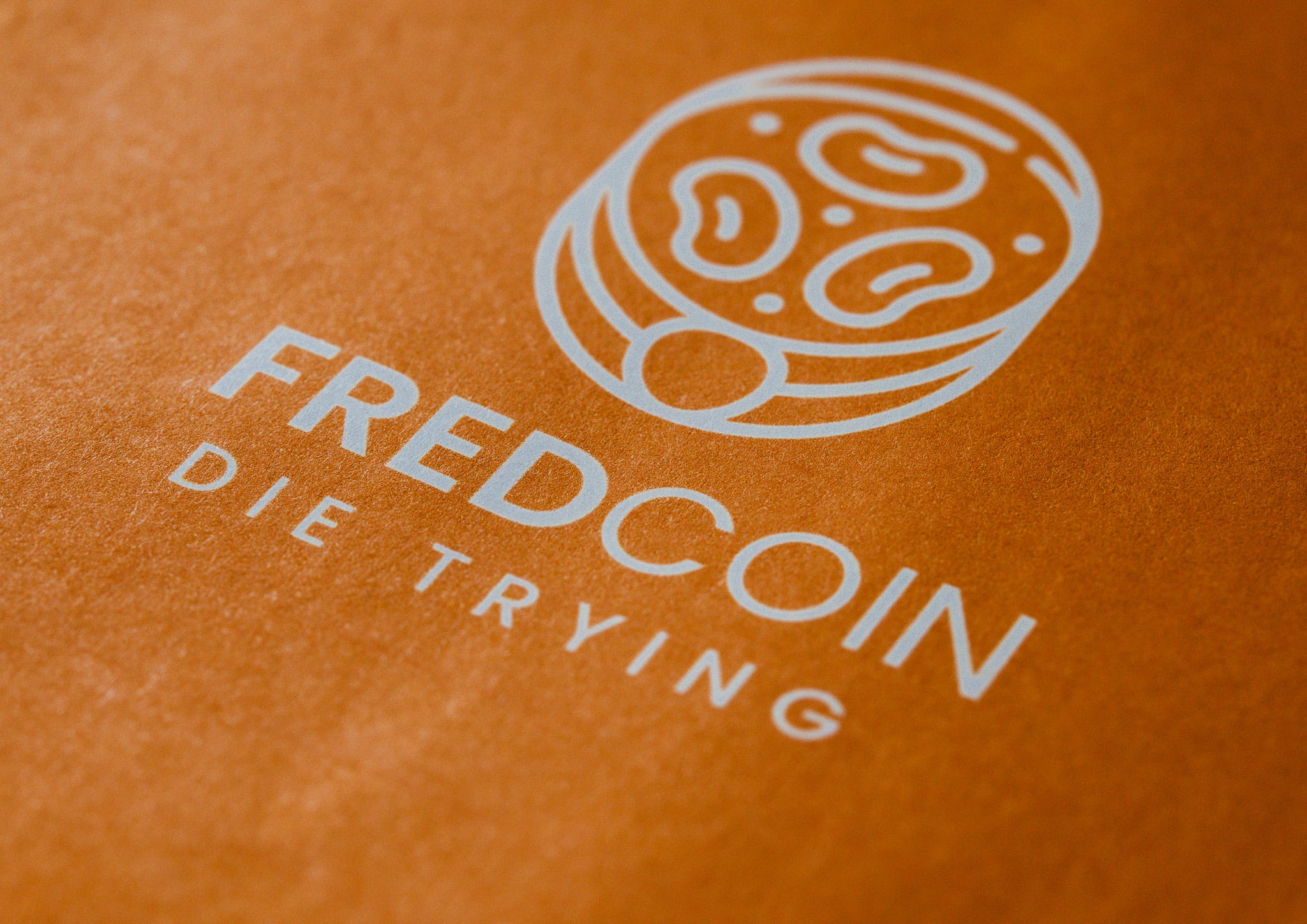
Fred was a conceptual artist, and having become sick—diabetes induced kidney failure—he decided to create a work around it. Crypto-based.
When Fred described the idea to his mom, she leaned close and took his hands with her plump fingers and said, “This is not a good idea, Fred. Please don’t do this.” Fred was very close with his mom, but he was also strong-willed and all his life he had defied her, and he laughed and gave no thought to her pleading.
FredCoin was launched with a short video in which Fred made this guarantee: “FredCoin will provide investment returns of at least 25% year-over-year, or I will literally die trying. FredCoin, integrated with algorithmic control of an artificial kidney, will clean or poison my blood, depending on a sliding average of returns on FredCoin.”
In the video, Fred peered out of the screen with great, unblinking intensity. He said, “This artwork symbolizes the offloading of the responsibility of healthcare in America from the people’s representative government, where it properly belongs, to informal networks and ‘virtual begging’ through GoFundMe and the like. FredCoin will soon become the world’s preeminent cryptocurrency because, unlike all other cryptos, which are inherently valueless, FredCoin has potentially infinite returns because it is backed by the value of a human life.”
Within six weeks of the launch of FredCoin, its value had tripled.
Fred was able to pay off the cost of his equipment and all of the expenses. He continued to document this and many other details of his life in a series of short form videos. He also enjoyed very much to see his bank account numbers grow larger and longer. Soon he began to create new cryptos. Fred’s second cryptocoin, called SadCoin, controlled his Zoloft prescription. Another cryptocoin, HydroCoin, controlled his water intake. His fourth cryptocoin, PainCoin, was algorithmically connected to a pair of electrodes in his back, which delivered an excruciating shock anytime the coin lost value.
SadCoin did well initially, but there were diminishing returns when he added the HydroCoin. And almost immediately after he launched PainCoin, it began to deliver shocks. Soon all of the coins were losing value. Fred posted videos in which he screamed in pain. He lay weak with illness and dehydration. He lay silent or spoke in slurring tones. In one video he shouted at people who were not there. In another, he suddenly vomited.
His mom began to appear in the videos, taking care of him. By now a large audience was watching and commenting on Fred’s videos, and while they expressed mixed feelings toward Fred, nearly all felt sympathy for his mother. Fred’s cryptocoins surged in a pity rally, but it was brief, and they soon drooped again. In one video, Fred’s mom begged him to end this madness. Trembling, gaunt and pale, he refused.
But then his mom fell ill.
Perhaps it was triggered by stress. Perhaps it was a virus. She collapsed. She complained of her heart; she complained of her lungs. She could scarcely get out of bed. For weeks Fred struggled to tend to his mom while also bearing the burdens of his various cryptocoins. The coin values oscillated wildly, and with them varied his ability to function. His mother grew worse. Her condition flummoxed her doctors. One day, she was rushed to the hospital, where a surgeon implanted a pacemaker. Pneumonia was involved. She was fading.
Fred, in a video, weeping, said, “I’m willing to sacrifice my own life for my art, but not my mom’s. I’ve got to help her. I’m going to unplug and disable the processors that control the cryptocoins’ effects on me. Owners of FredCoin, SadCoin, HydroCoin, and PainCoin, I’m sorry. Sue me, if you want.”
For several months, there were no more videos. Fred and his mom vanished. Fred’s coins became worthless.
Then a new video was posted in Fred’s feed. His mom was looking at the camera. She was alone. She was crying. She said she had killed Fred. While he labored to help her, his own condition had worsened, and finally, just when she could rise out of bed again, he passed away. “I feel,” she said, “a horrible, horrible guilt.” She sighed.
In the comments people began immediately to debate whether Fred was really dead, or if this was another of his contrivances.
“And,” Fred’s mom said, “I am burdened with gigantic medical bills, funeral bills, legal bills, a hundred other bills. So, I am launching a new cryptocurrency. I have had my pacemaker wired to a controller that will be algorithmically connected to the fluctuations of GriefCoin.” She leaned to the camera and cradled it with her plump fingers. “GriefCoin,” she said, “will be a terrific investment, because, while other cryptos were inherently valueless, GriefCoin is backed by the value of a human heart.”
Background and implorements: I’m on a mission to write and post a story a week for 2026. Check out this article about the project in Westword!
The stories are free, but here are some other ways you can support the author:
Pass this story forward to a friend.
Post a link on your socials.
Post a review of one of the author’s books.
This story is by Nick Arvin. Check out the previous stories. The fabulous illustrations for these stories are by Erin Schoepke/Lunascape Photograpy. See more of her images here. Follow her on Instagram. No AI was used in creating this story or the illustration.
Nick-Great essay on crypto, in a simple and easy to relate story. The value of any currency in all of history, relies on the hard, touchable assets that support that currency (in most cases, gold) and TRUST. Without one, you cannot have the other. The good thing about crypto is that it decentralizes money and movement including rules and costs that make it difficult for most people on earth to have an "account". The bad news, it is unregulated, with no real assets to back up the crypto-currency. Until assests and trust are available, it is just another form of gambling.